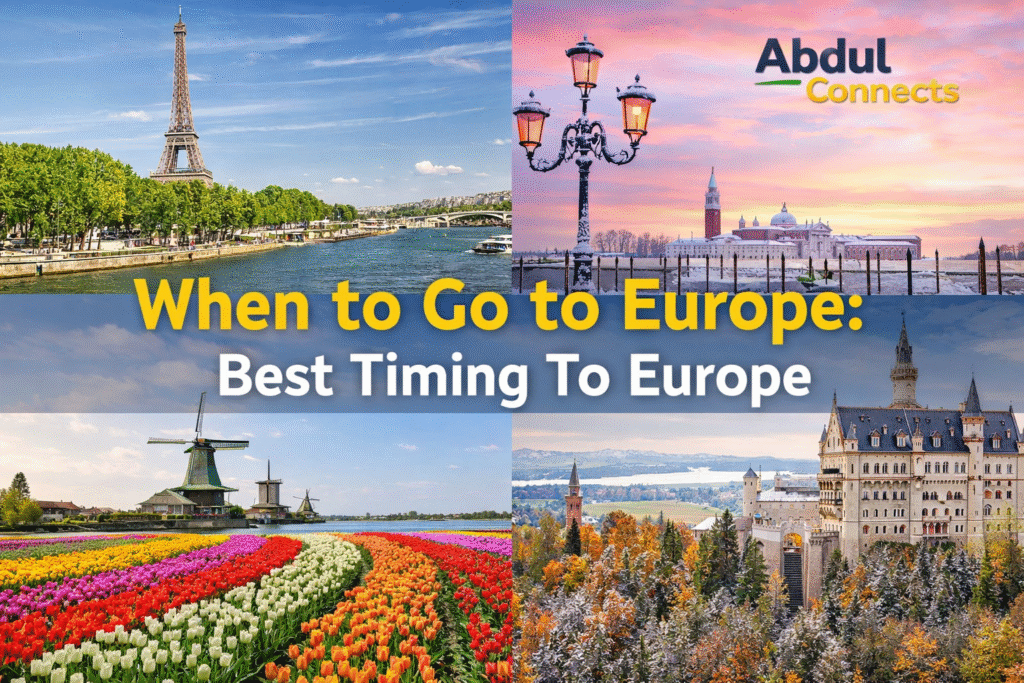
Europe is one of the few regions in the world that welcomes travelers all year round. Whether you’re chasing sunshine, festivals, snowy Christmas markets, or quiet museums, the best time to visit Europe depends entirely on what kind of experience you want — and how flexible your schedule is.
Some travelers can travel anytime, while others are limited by work calendars, school holidays, or budget constraints. The good news? Europe doesn’t have a “bad” season. Each part of the year offers a different rhythm, mood, and set of advantages.
This guide breaks down peak season, shoulder season, and off-season travel in Europe, helping you decide when to go based on crowds, weather, prices, and overall experience.
Understanding Europe’s Travel Seasons
The European travel year is generally divided into three main seasons:
| Travel Season | Months | What to Expect |
|---|---|---|
| Peak Season | May – September | Best weather, biggest crowds, highest prices |
| Shoulder Season | April & October | Balanced weather, fewer tourists, good value |
| Off-Season | November – March | Lowest prices, quiet cities, cold & shorter days |
Each season comes with clear pros and cons, and none is objectively “better” than the others.
Peak Season in Europe (May to September)
Peak season is Europe at full throttle. Long daylight hours, festivals, beach weather, and a lively atmosphere make summer irresistible for many travelers.
Why People Love Peak Season
- Warm, sunny weather across most of Europe
- Long days — sightseeing can stretch into late evenings
- Beaches, outdoor cafés, and nightlife are at their best
- All attractions, tours, and transport run at full capacity
Challenges of Traveling in Peak Season
- Crowded attractions and busy city centers
- Higher flight, hotel, and transport prices
- Heatwaves, especially in Southern Europe
- Popular destinations can feel overwhelming
Smart Tips for Peak-Season Travel
Plan with crowd control in mind
Visit major attractions early in the morning or later in the evening. Cities feel very different at 8 a.m. compared to 1 p.m.
Stay overnight in popular day-trip towns
Places that feel chaotic during the day often become peaceful at night once tour buses leave.
Prepare for heat
Summer temperatures can be intense, particularly in Italy, Spain, Greece, and southern France. Lightweight clothing, water bottles, and midday breaks are essential.
Don’t fear July and August too much
While some local businesses close for holidays, tourists are rarely affected. Just avoid major highways at the start or end of holiday periods.
Destinations Best in Peak Season
- Northern Europe and Scandinavia
- The UK and Ireland
- Mountain regions and alpine hiking areas
These places benefit from longer daylight and milder summer weather.
Shoulder Season in Europe (April & October)
Shoulder season is often considered the sweet spot for European travel. It blends many of the advantages of summer with fewer crowds and better prices.
Why Shoulder Season Works So Well
- Pleasant temperatures without extreme heat
- Noticeably fewer tourists than summer
- More affordable hotels and flights
- Attractions, tours, and restaurants are still fully open
Regional Differences Matter
In Mediterranean destinations, spring and autumn can still feel very busy. Southern Europe in April or October may experience near-summer conditions.
Spring vs Fall: Which Is Better?
| Factor | Spring (April) | Fall (October) |
|---|---|---|
| Landscapes | Green, fresh, blooming | Dry, golden, autumn tones |
| Weather | Mild, sometimes rainy | Mild, generally stable |
| Hiking | Snow still at altitude | Ideal for mountains |
| Crowds | Building up | Tapering off |
Hikers often prefer early autumn, especially in alpine regions, because snow has melted and trails are fully accessible.
Off-Season in Europe (November to March)
Off-season travel shows a quieter, more local version of Europe. While the weather can be challenging, the rewards are significant for the right traveler.
Advantages of Off-Season Travel
- Significantly cheaper flights and accommodation
- Minimal crowds at major attractions
- A more authentic, local atmosphere
- Easy access to museums, galleries, and cultural events
Many travelers describe winter Europe as calmer, more intimate, and deeply atmospheric.
What to Watch Out For
- Cold, wet, or unpredictable weather
- Short daylight hours, especially in northern regions
- Reduced opening hours or seasonal closures
- Fewer English-language tours
Packing and Planning Tips
- Dress in layers and pack waterproof clothing
- Plan sightseeing around daylight hours
- Focus on larger cities where life continues year-round
- Double-check attraction opening times in advance
Best Off-Season Experiences
- Museums, concerts, opera, and cultural events
- Christmas markets in December
- Quiet historic centers without tourist crowds
- Lower hotel prices in leisure-focused cities
Pros and Cons Summary by Season
| Season | Pros | Cons |
|---|---|---|
| Peak | Best weather, lively atmosphere | Crowds, heat, higher prices |
| Shoulder | Balance of comfort and value | Weather less predictable |
| Off-Season | Cheapest, peaceful, authentic | Cold weather, closures |
What Travelers Commonly Say (Public Opinion)
- Budget travelers favor off-season travel for affordability and calm
- First-time visitors often choose peak or shoulder season for convenience
- Experienced travelers prefer shoulder season for balance
- Culture-focused travelers enjoy winter for museums and performances
Overall, travelers agree that Europe rewards those who match the season to their travel style, not just the calendar.
Final Thoughts: When Is the Best Time to Visit Europe?
There is no single best time to visit Europe — only the best time for you.
- Choose peak season if weather and energy matter most
- Choose shoulder season for balance and value
- Choose off-season for savings, solitude, and culture
Europe delivers unforgettable experiences in every season. With realistic expectations and smart planning, any time of year can be the perfect time to go.
Disclaimer: AbdulConnects is an informational content platform. AbdulConnects is not responsible for any decisions, losses, or damages of any kind. Before making any financial or travel-related decisions, readers should conduct their own research and consult a licensed travel agent or relevant authority, especially when planning international travel.