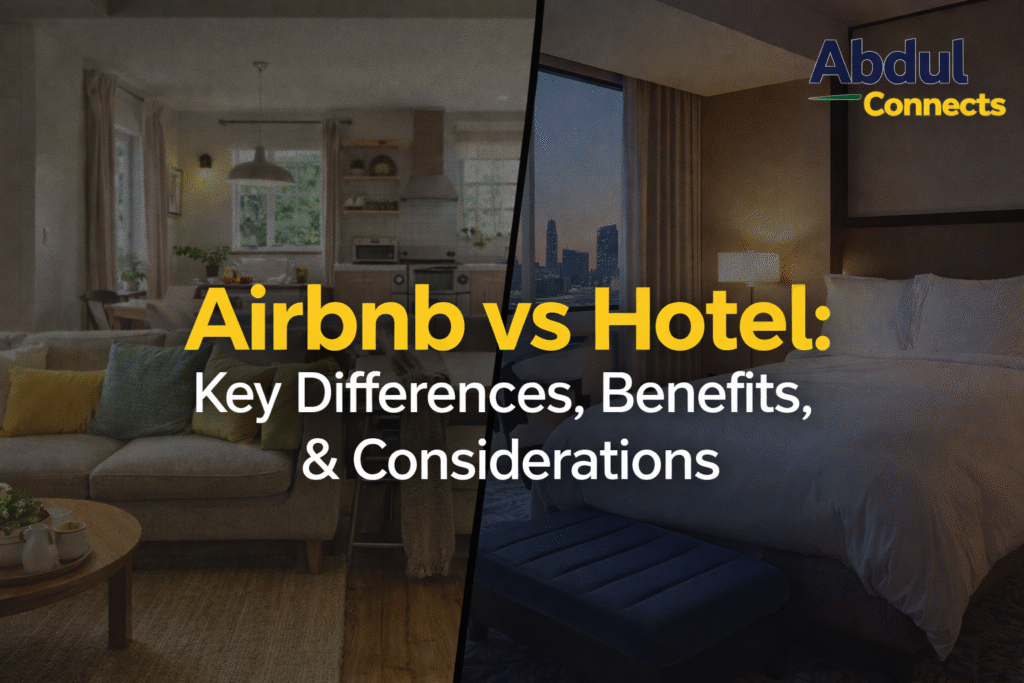
Debating between Airbnb vs hotel accommodation is one of the most common travel decisions today. Both options can deliver a great stay — but they serve very different travel styles, expectations, and priorities.
Some travelers want hotel reliability, security, and amenities. Others prefer Airbnb’s space, flexibility, and neighborhood feel. The right choice depends on what matters most for your trip — budget, comfort, experience, safety, or convenience.
This guide breaks down the real differences, benefits, drawbacks, and practical considerations so you can confidently choose the stay that fits your travel style.
Key Takeaways
- Airbnb offers more space, home-like comfort, and unique local stays — but quality and service vary by host.
- Hotels provide standardized service, safety, and amenities — ideal for predictable, hassle-free stays.
- Cost comparisons depend heavily on hidden fees, location, and trip length.
- Your decision should reflect trip purpose, travel companions, and personal comfort preferences.
The Main Differences Between Airbnb and Hotels
Understanding the structural differences helps travelers avoid surprises and book smarter.
Types of Stays



Airbnb offers a broad range of stay styles:
- Private rooms in shared homes
- Entire apartments or houses
- Luxury villas
- Unique stays (treehouses, cabins, tiny homes)
Hotels are structured around hospitality categories:
- Budget hotels
- Boutique hotels
- Business hotels
- Luxury resorts
Best fit:
| Travel Need | Better Choice |
|---|---|
| Family/group travel | Airbnb |
| Short business stay | Hotel |
| Unique getaway | Airbnb |
| Luxury convenience | Hotel |
Price and Value
Accommodation pricing is rarely straightforward. Nightly rates only tell part of the story.
| Cost Factor | Airbnb | Hotel |
|---|---|---|
| Base nightly rate | Often lower | Usually higher |
| Cleaning fees | Common | Included |
| Resort/service fees | Rare | Sometimes applied |
| Group savings | Strong advantage | Limited |
Airbnb can look cheaper upfront — especially for longer stays or groups — but cleaning and service fees may narrow the gap. Hotels bundle most services into one predictable price.
Practical tip: Always compare the final checkout total, not the advertised nightly rate.
Experience and Amenities


4
Hotels operate on hospitality standards:
- 24/7 reception
- Housekeeping
- Concierge services
- Pools, gyms, dining
Airbnb focuses on independence:
- Larger living space
- Kitchens
- Self-managed stays
- Personalized host interaction (varies widely)
Travelers who want service and predictability prefer hotels. Those valuing autonomy often lean toward Airbnb.
Location
Hotels cluster around:
- City centers
- Airports
- Tourist districts
Airbnb properties extend into:
- Residential neighborhoods
- Rural settings
- Off-grid retreats
This makes Airbnb attractive for travelers seeking immersion in local communities — but it may involve longer commutes or fewer nearby services.
Community impact note: In some destinations, heavy short-term rentals have contributed to housing pressures and neighborhood disruption — something ethical travelers increasingly consider.
Flexibility
| Policy Area | Airbnb | Hotel |
|---|---|---|
| Check-in/out | Often flexible | Standardized |
| Cancellation | Host dependent | Usually predictable |
| Luggage storage | Rare | Common |
Hotels typically offer smoother logistics for tight schedules, while Airbnb provides flexibility when hosts allow.
Safety and Security
Hotels maintain regulated safety standards:
- On-site staff
- Controlled access
- Emergency procedures
Airbnb safety varies by property. Responsible hosts provide secure environments, but travelers should verify listings carefully.
Safety checklist for Airbnb stays:
- Book verified listings with strong reviews
- Confirm smoke detectors and locks
- Communicate only via platform
- Report suspicious issues immediately
For solo travelers or unfamiliar destinations, hotels often provide greater peace of mind.
Benefits of Airbnb vs Hotel Stays
Hotel Advantages
- Reliable service
- Professional safety standards
- Amenities included
- Flexible cancellation options
- Immediate assistance when needed
Airbnb Advantages
- More living space
- Kitchens for longer stays
- Unique accommodation options
- Flexible check-in
- Neighborhood immersion
Downsides to Consider
Hotel Drawbacks
- Higher nightly cost
- Smaller rooms
- Tourist-heavy locations
- Additional service fees
Airbnb Drawbacks
- Cleaning charges
- Quality inconsistency
- Limited on-site support
- Risk of last-minute host cancellation
A Real-World Example
A couple visiting New York booked a hotel near Midtown for convenience during a 3-day trip — maximizing sightseeing time.
Months later, they returned for a 2-week stay and chose an Airbnb apartment in Brooklyn. The kitchen, laundry access, and neighborhood atmosphere made the longer visit more comfortable and affordable.
Lesson: Trip duration and goals heavily influence the best choice.
What Travelers Are Saying (Public Sentiment Summary)
Traveler feedback often highlights:
Positive hotel experiences
- Reliable check-in
- Cleanliness consistency
- Helpful staff
Positive Airbnb experiences
- Extra space
- Local atmosphere
- Budget value for groups
Common concerns
- Airbnb cleaning fees surprise guests
- Hotel rooms feel cramped for families
- Inconsistent Airbnb host communication
Overall, travelers appreciate having both options — choosing based on trip purpose.
When to Choose Airbnb vs Hotel
| Travel Scenario | Recommended Option |
|---|---|
| Weekend city break | Hotel |
| Family vacation | Airbnb |
| Business travel | Hotel |
| Extended stay | Airbnb |
| Luxury getaway | Hotel |
| Unique retreat | Airbnb |
Conclusion: Which Stay Fits Your Travel Style?
There is no universal winner in the Airbnb vs hotel debate — only the option that aligns with your trip priorities.
Choose Airbnb when you want space, flexibility, and a neighborhood experience.
Choose hotels when you want reliability, amenities, and safety.
Smart travelers compare total costs, read reviews carefully, and match accommodation style to trip goals. Doing so transforms lodging from a simple booking into a key part of the travel experience.
Frequently Asked Questions
Is Airbnb always cheaper than hotels?
Not always. Cleaning and service fees can raise total costs, especially for short stays.
Are hotels safer than Airbnb?
Hotels typically offer standardized safety protocols. Airbnb safety depends on the host and property verification.
Which is better for families?
Airbnb often provides more space and kitchens, making it ideal for families.
Disclaimer: AbdulConnects is an informational content platform. AbdulConnects is not responsible for any decisions, losses, or damages of any kind. Before making any financial or travel-related decisions, readers should conduct their own research and consult a licensed travel agent or relevant authority, especially when planning international travel.