
Finding a job today can feel overwhelming. With hundreds—or even thousands—of people applying for the same role, the old advice of “just apply everywhere” doesn’t work like it used to. The key now isn’t working harder, but working smarter by choosing the right strategy.
The Big Choice: Precision vs. Volume
Every job seeker faces a core decision. Do you apply to as many jobs as possible, or do you focus deeply on a small number of roles that truly fit you? The truth is, the best approach for most people is a mix of both, adjusted over time.
Step 1: Start with Precision
At the beginning of your search, it’s smarter to be selective. Focus on roles where your experience closely matches what the employer wants. This means resisting the urge to switch industries, aim for a big promotion, or apply to roles where you only meet part of the requirements.
Networking plays a big role here. Let people know you’re looking—former coworkers, classmates, friends, and even acquaintances. Ask about their companies, open roles, and whether they’d be willing to refer you. If you don’t know anyone inside a company you admire, reaching out politely to people already in those roles can still pay off. Not everyone will reply, but a few conversations can make a real difference.
This approach works because referrals and early information help your application stand out, give you insight into what the company actually wants, and reduce the emotional toll of constant rejection.
Step 2: Add Some Volume
Once you’ve done as much networking as you reasonably can, it’s time to widen the net. Applying to jobs without connections isn’t useless—it’s just less effective on its own. A smart move is to keep a strong, customized résumé for your top-choice roles, and a simpler, general résumé for quicker applications to jobs that are a decent (but not perfect) fit.
Timing matters here. Apply quickly to new postings, focus on roles posted recently, and skip openings that already have massive applicant counts. Small signals of interest—like following a company or marking a role as a top choice—can also help a little.
Think of this as insurance. You may not love every role you apply to, but landing a “good enough” job can be better than waiting indefinitely in a tough market.
Step 3: Keep Adjusting
Your strategy shouldn’t be fixed. Pay attention to results. If you’re applying a lot but hearing nothing back, shift toward fewer, more targeted applications. If you’re being too selective and time or finances are tight, lean more toward volume.
Your experience level matters too. Early-career candidates often benefit from applying more broadly, while experienced professionals usually do better focusing on a smaller set of well-matched roles. The goal is to keep testing, learning, and adjusting—not to be perfect.
The Big Takeaway
There’s no magic formula that guarantees a job offer. But a thoughtful, flexible strategy—starting with precision, adding volume, and continuously refining your approach—gives you far better odds than blindly applying everywhere. Persistence, adaptability, and patience matter more than ever.
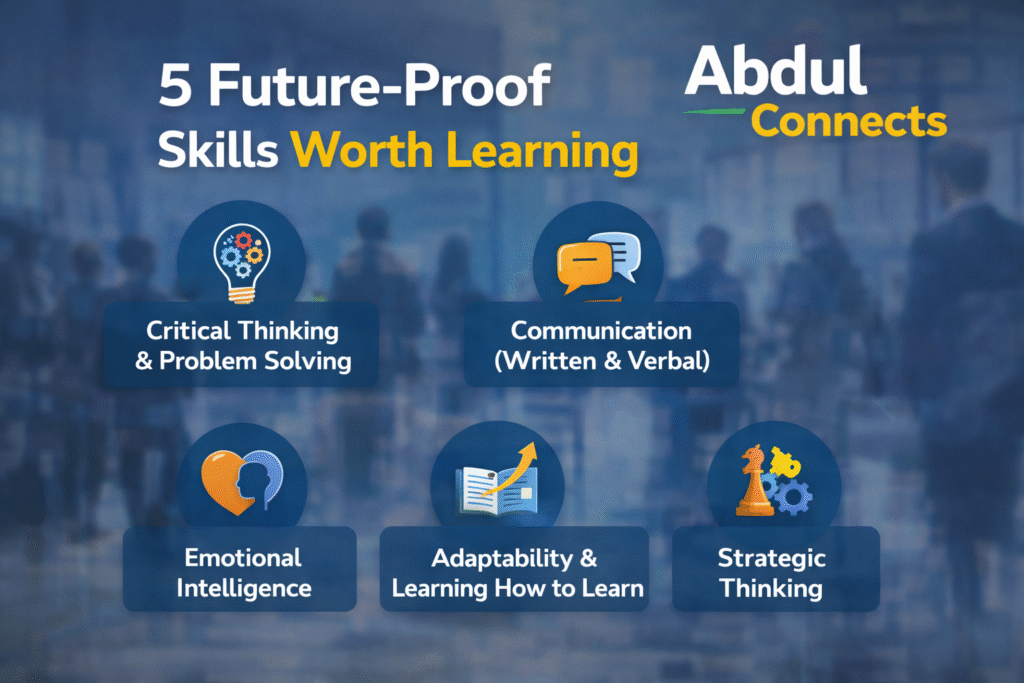
5 Future-Proof Skills Worth Learning
These skills are valuable across industries and are unlikely to make your job obsolete—instead, they make you harder to replace.
Critical Thinking & Problem Solving
The ability to analyze situations, ask good questions, and make sound decisions is something automation still struggles with.Communication (Written & Verbal)
Clearly explaining ideas, persuading others, and collaborating effectively are core human skills that technology supports but can’t replace.Emotional Intelligence
Understanding people, managing conflict, and building trust are essential in leadership, teamwork, and client-facing roles.Adaptability & Learning How to Learn
Tools will change, but the ability to quickly learn new ones and adapt to change will always be in demand.Strategic Thinking
Seeing the bigger picture, setting priorities, and connecting actions to long-term goals is a skill that grows more valuable as work becomes more complex.